Banksy statue central london
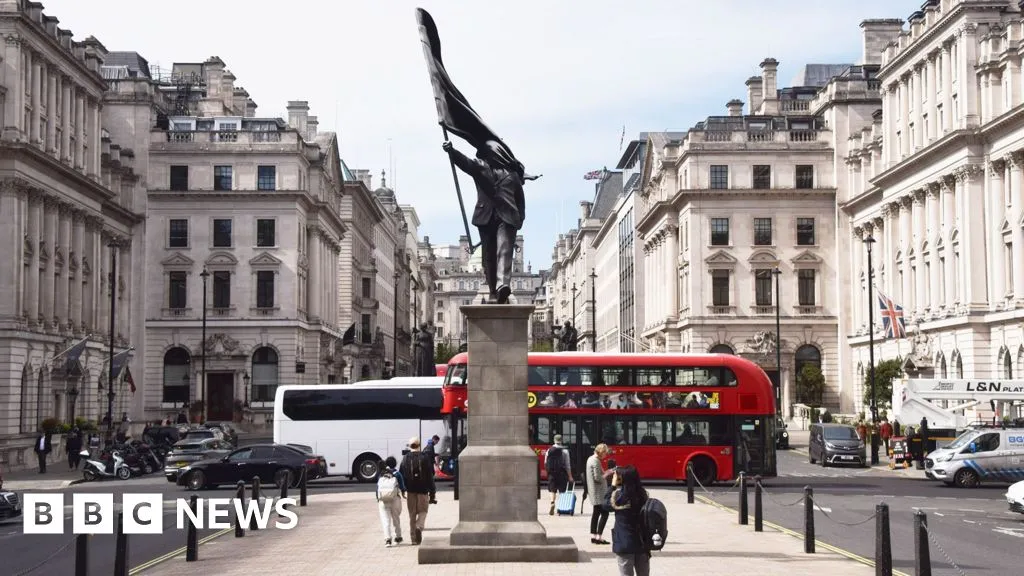
In the early hours of April 30, 2026, a new sculpture by Banksy appeared in Waterloo Place, London, humorously depicting a leader blinded by a flag. This unconventional piece challenges traditional notions of public statues.
The statue, made from resin or fibreglass, shows a man striding off a plinth, seemingly oblivious to the precipice ahead. Positioned on a traffic island near Buckingham Palace, it stands in stark contrast to the nearby statues of King Edward VII and Florence Nightingale.
Banksy confirmed the work through a playful video on Instagram. “It’s really clever,” said podcaster Peak. “It captures a very precise moment in time, where the flag’s kind of blinding this puffed-up, besuited leader who’s about to step off a precipice and look very silly indeed.”
This unveiling marks Banksy’s first foray into sculpture—he is primarily known for his street art that has captivated audiences since the early 1990s. His identity remains shrouded in mystery, adding an allure to his works that often critique societal norms.
Westminster City Council welcomed the statue as part of London’s vibrant public art scene and announced they would not remove it. This decision reflects an increasing acceptance of contemporary art forms within traditional settings.
As Banksy’s artworks have sold for millions at auction, this latest piece adds another layer to his extensive portfolio. It invites viewers to reflect on leadership and the absurdities of power in modern society.
The juxtaposition of this whimsical statue against historical figures raises questions about how we commemorate leaders and their legacies. As pedestrians pass by, they might find themselves chuckling at the absurdity of the scene before them.
For those familiar with Banksy’s work, this piece reaffirms his knack for blending humor with critique—a hallmark of his artistic identity.
As London’s public art landscape continues to evolve, Banksy’s contribution will likely spark discussions about the role of such installations in urban spaces.
Related Posts

Sony PlayStation Plus June 2026: A Challenging Month Ahead
Evil Dead Burn: A Family Reunion Gone Horribly Wrong