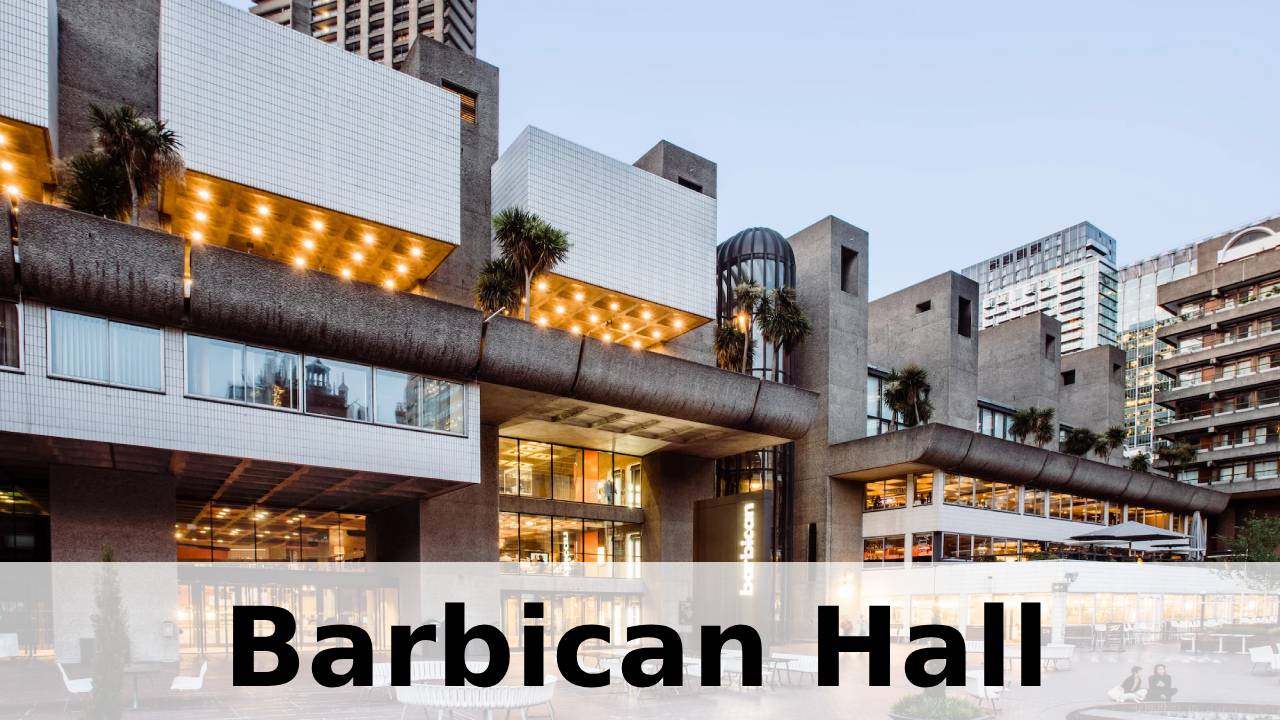
Barbican Hall: A Premier Concert Venue in London

Barbican Hall is a venue for concerts located within the Barbican Centre, hosting performances of both classical and contemporary music. This cultural facility is home to the London Symphony Orchestra and the BBC Symphony Orchestra. In this article, we will explore the history of this renowned hall, provide directions on how to reach it, and suggest accommodation options in the vicinity.
| Name | Barbican Hall |
| Country | Great Britain |
| Year founded | 1971 |
| Address | Silk Street, London EC2Y 8DS |
| Attendance | Approximately 1 million people per year |
| Capacity | Concert Hall: 1,943 seats |
| Notable events | Barbican International Film Festival, London Symphony Orchestra concerts, Contemporary Arts Exhibitions, Barbican Jazz & Classical Series |
| Architects | Peter Chamberlain, Geoffrey Powell, and Christophe Bon |
Background
The Barbican London forms part of a residential development of the same name, constructed during the 1960s and 1970s on land that suffered extensive bombing in the Second World War. The concert hall’s name is associated with the historical significance of the ancient era: in the location of the current London district, the Romans established barbicans—tower-like defensive structures intended to safeguard the Roman ‘colony’ from assaults.
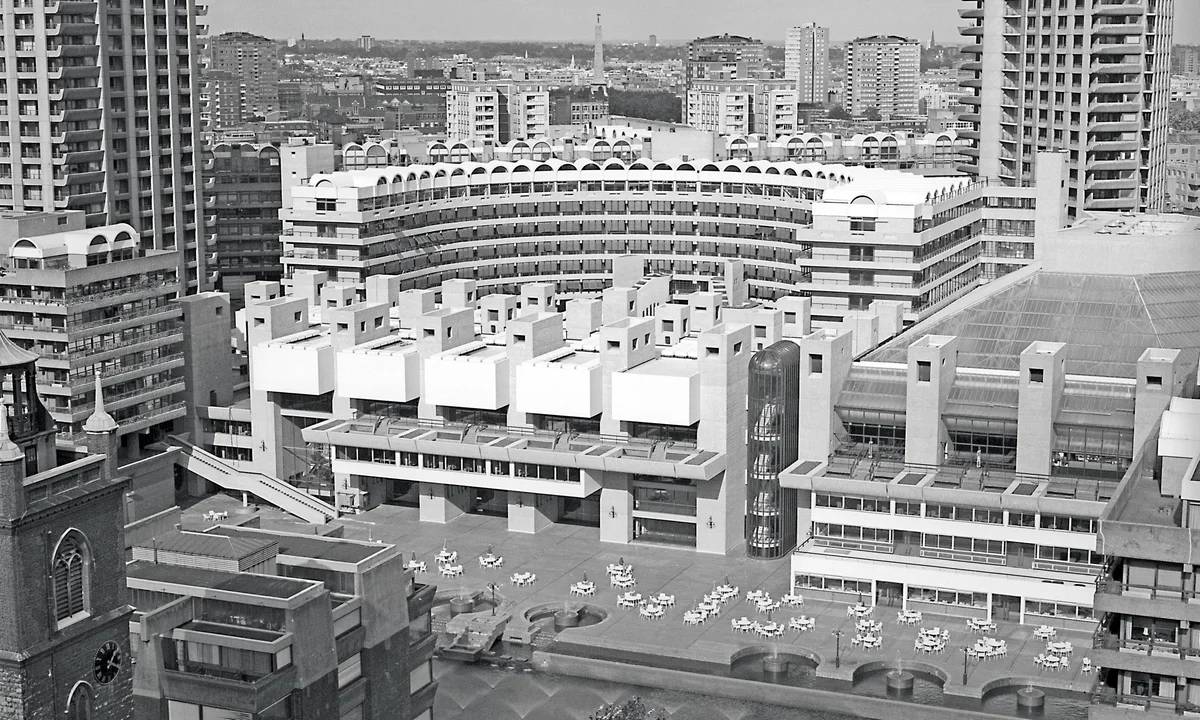
The proposal for the concert hall received approval in 1971. The architects involved in the project were Peter Chamberlain, Geoffrey Powell, and Christophe Bon. Construction commenced on the site of the Barbican residential area.
The centre was formally inaugurated for public access on 3 March 1982, with Queen Elizabeth present at the opening ceremony. The Barbican Centre was initially envisioned as a ‘gift from the city to the nation.’ The total expenditure for its construction amounted to £161 million.
The concert hall features performances of both classical and contemporary music. It acts as a venue for concerts and rehearsals for two of the country’s most prominent orchestras.
In 2013, the centre resumed its role as the London location for the Royal Shakespeare Company after they had left in 2001. The building of the concert complex is characterised by its brutalist architectural style, which was typical of English design in the post-war era. The concert hall is notable for its intentionally low, ‘sprawling’ multi-tiered layout, with levels that extend both upwards and downwards. In 2001, the complex received Grade II listed status.
The Barbican Concert Hall frequently showcases The Nutcracker ballet. As the largest cultural complex in London, it invites esteemed ballet companies, including the English National Ballet, to present the iconic ballet, which enjoys particular popularity during the Christmas season. Audiences take pleasure in attending these performances, and the Barbican offers professional support to ensure successful productions.
Where is the Barbican Centre situated?
The Barbican Centre is situated in the heart of the capital of the United Kingdom, within the City of London. Its address is Silk Street, London EC2Y 8DS, United Kingdom.
As the largest cultural hub in Europe, featuring a concert hall, theatres, exhibition areas, a cinema, and a library, it is positioned adjacent to Moorgate and Barbican underground stations, ensuring convenient public transport access. The venue is part of the contemporary residential district known as Barbican Estate, which is recognised for its brutalist architectural style.
Seating arrangement at the Barbican Hall
The Barbican in London features multiple primary halls, each possessing its own unique seating arrangement:
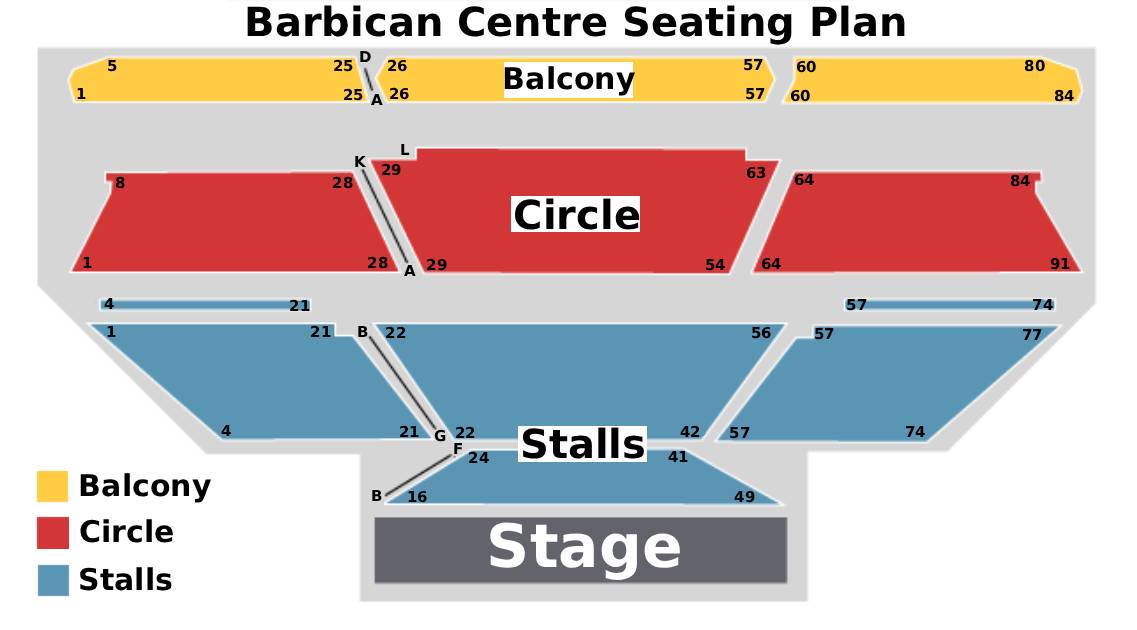
Barbican Hall accommodates a total of 1943 seats. The seating is categorised into Stalls, Circle, and Balcony. The layout comprises rows with both central and side sections, designed for optimal viewing of classical music events, orchestral performances, and concerts.
Capacity of the Barbican Centre
The capacity of the Barbican varies according to the specific venue. The Barbican Theatre accommodates between 1,154 and 1,156 individuals. This venue serves as the primary theatre, intended for dramatic performances and shows.
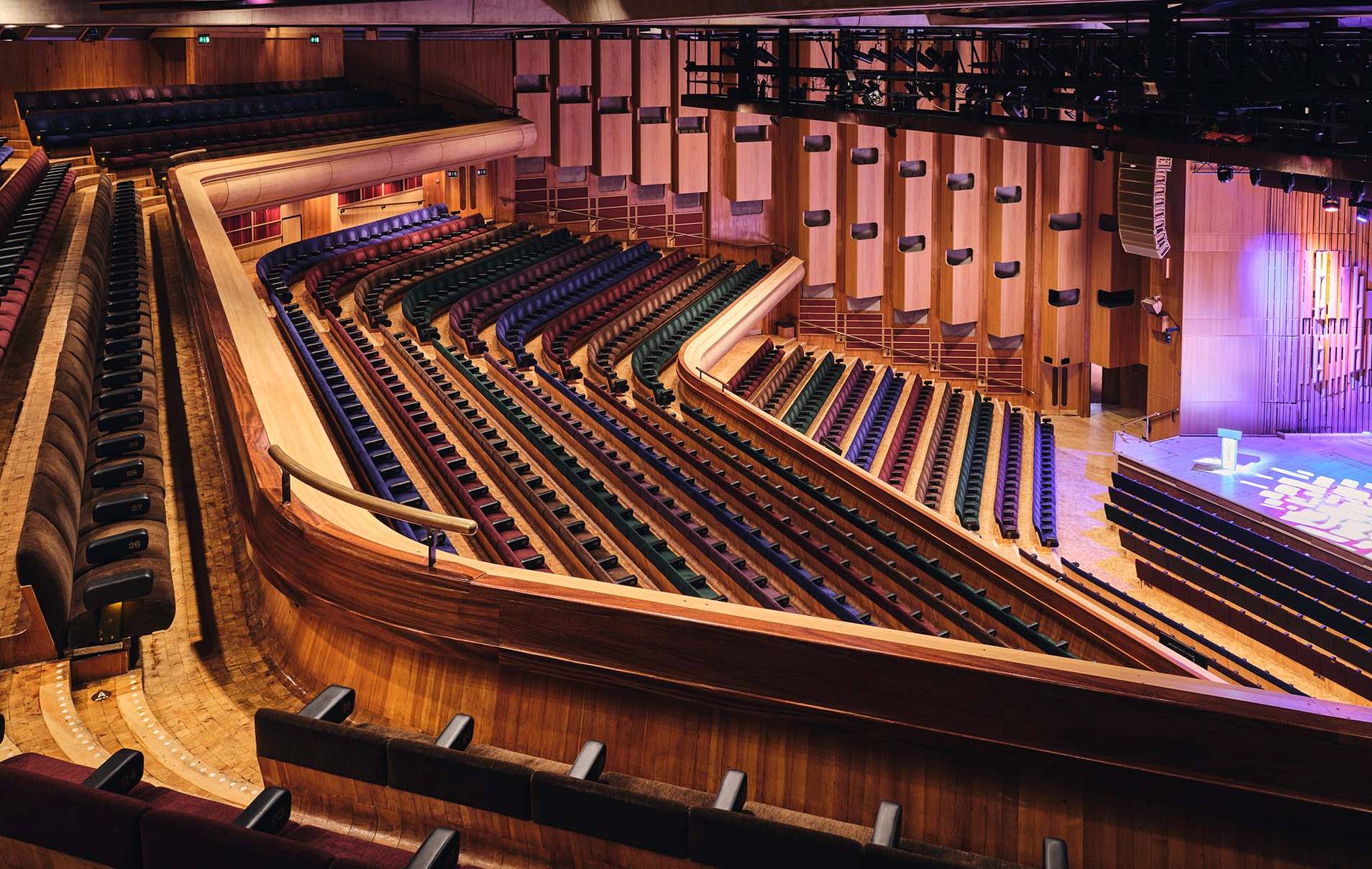
The Barbican Hall, which is tailored for orchestral and classical music performances, offers 1,943 seats. The Pit Theatre is a compact multi-functional space for chamber productions and experimental shows, featuring just 200 seats. Cinemas and other areas designed for film presentations, lectures, and masterclasses can seat between 150 and 300 attendees.
What are the ways to reach the Barbican Centre?
You can access the Barbican Centre via the tube, bus, or by car.
Closest underground stations
The nearest underground stations to the concert hall are:
- Barbican (Circle, Hammersmith & City, Metropolitan) – 2 minutes’ walk.
- Farringdon (Circle, Hammersmith & City, Metropolitan, Thameslink) – 5 minutes on foot.
- Moorgate (Northern, Circle, Hammersmith & City, Metropolitan) – 7 minutes on foot.
By bus
The closest bus stops to the cultural centre are within a 2-5 minute walk. Buses on routes 4, 56, 153, 214, 242, and 521 service this area. The walking distance to the centre is between 2 and 5 minutes.
By vehicle
You can reach the concert hall by vehicle as well. Parking typically isn’t an issue, particularly if you opt for the early booking choice.
Events at Barbican Hall
Throughout the years, the Barbican Centre has been the venue for performances by renowned artists, alongside exhibitions and theatrical shows:
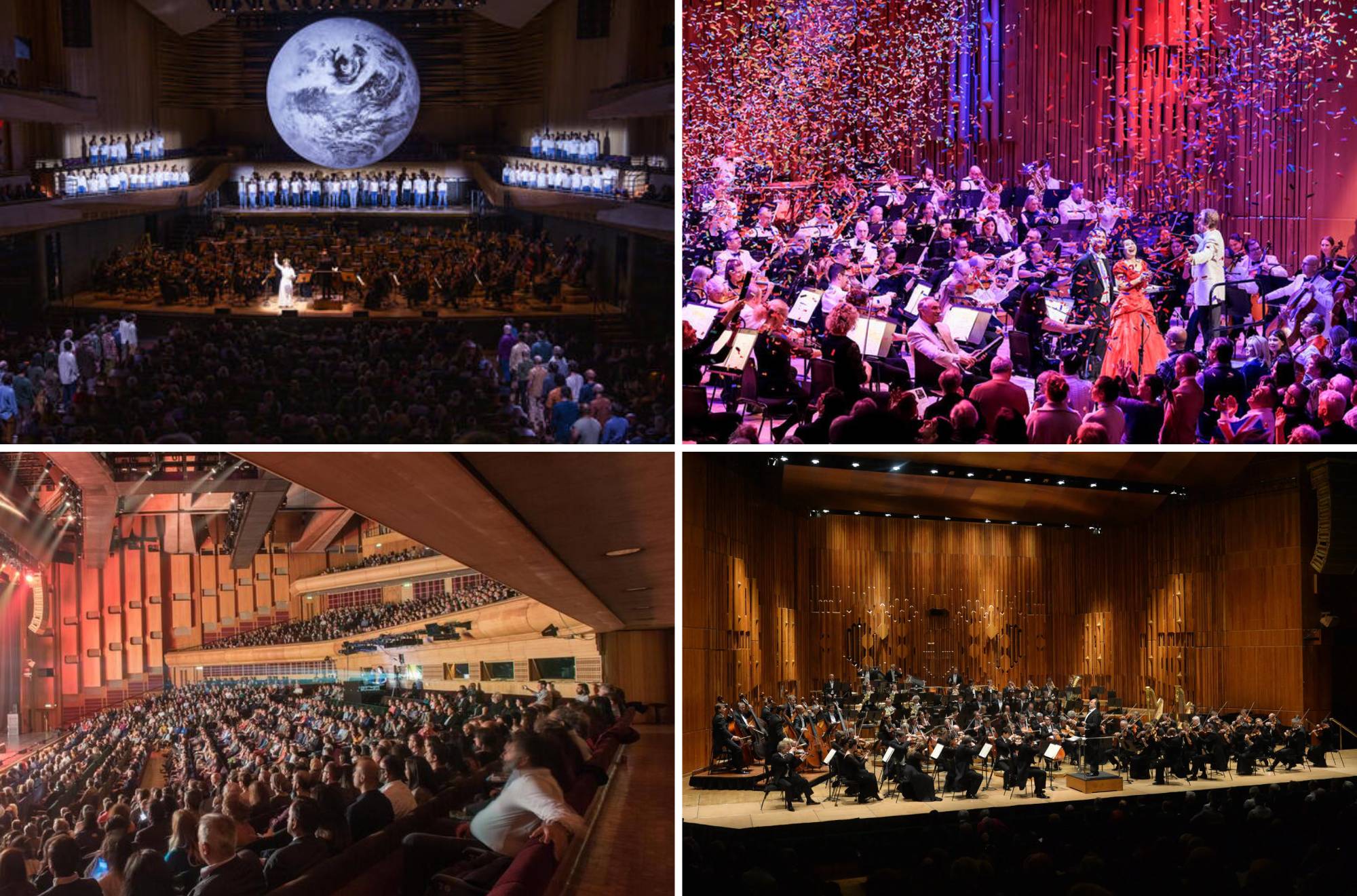
- Dirty Looks: Desire and Decay in Fashion — an exhibition that reinterpreted conventional norms within the fashion industry. In September 2025, the Barbican Centre showcased an exhibition where dirt, stains, scuffs, and the passage of time served as a form of artistic expression. This innovative approach allowed designers to convey their dissent, philosophy, and environmental views. The exhibition occupied twelve rooms, each functioning as an independent space.
- Encounters: Giacometti x Huma Bhabha — an exhibition displaying sculptures by Bhabha and Giacometti, covering nearly a century of artistic development.
- Performances by the London Symphony Orchestra and Antonio Pappano — December 2025.
- Concerts by the BBC Symphony Orchestra — in December 2025.
- Performances by the Royal Shakespeare Company: Les Miserables and Trevor Nunn’s Henry IV, Parts I and II.
The Barbican Cinema frequently features film screenings. In December 2025, the films Die My Love, Animalia, and Pillion were showcased.
Visitor Information
Prior to your visit to the Barbican Centre, it is recommended to check the nearby dining options, accommodation possibilities, and the parking arrangements available.
Accommodation Options near the Barbican Hall
There are numerous quality hotels situated near the Barbican Centre:
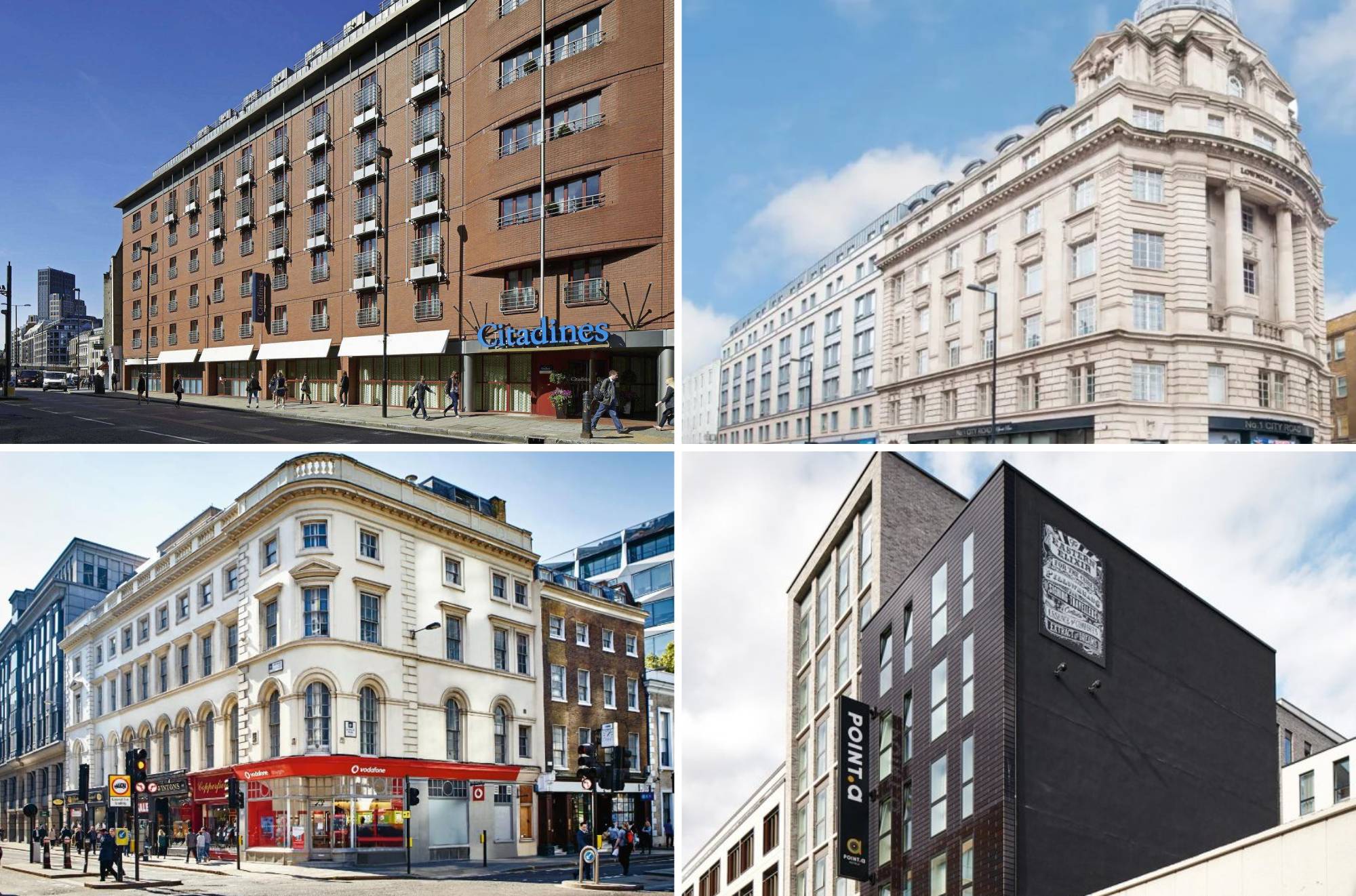
- Citadines Apart’hotel Barbican London — an aparthotel located in the Barbican district.
- Malmaison London — a chic hotel with outstanding guest feedback.
- Premier Inn London Farringdon (Smithfield) — a solid choice regarding cost-effectiveness.
- Travelodge London Central City Road — a budget-friendly hotel close to the underground station and within walking distance of the concert venue.
- The Moorgate by Cove — apartments ideal for families and extended stays.
- Fox & Anchor (Hotel) — a charming hotel-pub conveniently located near Barbican.
- Point A London, Shoreditch — an economical option in the Barbican/Old Street vicinity.
Dining Options Close to Barbican Hall
There are numerous dining establishments in proximity to the Barbican Centre, with some of the most favoured being:
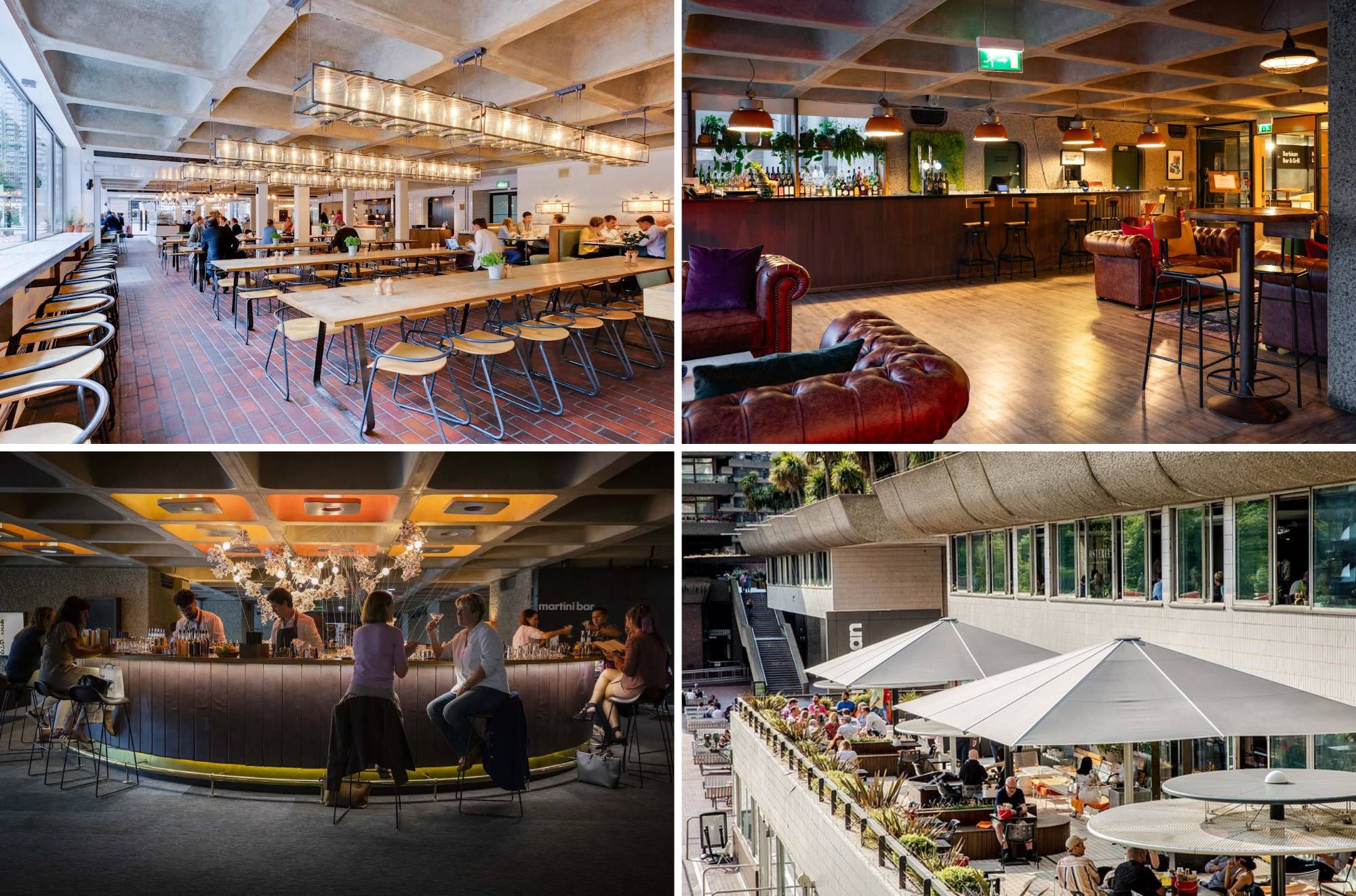
- Barbican Kitchen — a café that serves straightforward dishes and quick bites.
- Barbican Bar & Grill — a restaurant that focuses on modern British cuisine while offering views of the lake.
- Martini Bar — a venue with an extensive range of beverages and light snacks available before or after an event.
A short stroll from the centre leads to the contemporary Indian restaurant Mayura Barbican, Côte Barbican — a French bistro praised for its offerings, and St. John — a renowned British restaurant known for its traditional dishes.
Parking
You can park your vehicle directly beneath the Barbican Centre. Access is available from both Silk Street and Beech Street (through the tunnel). The maximum height allowed is 1.85 m. It is possible to reserve a parking spot online and settle the payment upon arrival.
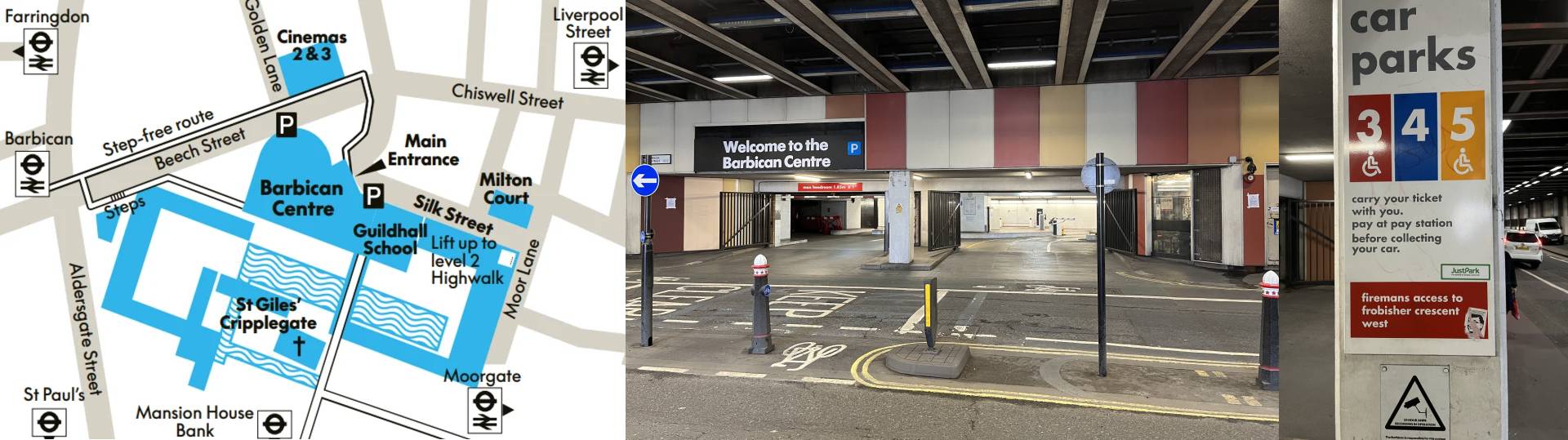
Barbican Car Park – Beech Street is situated within the Barbican complex and can be accessed via Beech Street. Additionally, there are other parking facilities in the vicinity, such as CitiPark London Barbican, which is approximately a 5-10 minute stroll away.
Further alternatives include the City of London Corporation – Car and Bike Parking (London Wall Car Park), a spacious underground parking facility close to Barbican, and Bunyan Court Car Park, a smaller private car park located within the area (which can be utilised if the main car parks are at capacity).
Estimated parking charges are as follows:
- up to 1 hour – £7;
- up to 2 hours – £10.5;
- up to 3 hours – £14;
- 24 hours – £40-46.
The evening rate from 4 p.m. until 6 a.m. is approximately £13. For those entering early (between 5:30 a.m. and 9:30 a.m.), there are deals available for £12 for a duration of 12 hours.
Contact information and postcode
Location: Silk Street, London, EC2Y 8DS, United Kingdom. Primary postcode EC2Y 8DS.
Main contact number: +44 20 7870 2500
Information line: +44 20 7638 8891
Ticket reservations: +44 20 7101 1188
 Website
 Instagram
 Facebook
Common inquiries
What years did the construction of the Barbican Centre span?
The Barbican Centre was constructed over the period from 1971 to 1982.
Who was responsible for the design of the Barbican Centre?
The Barbican Centre was designed by architects Peter Chamberlain, Geoffrey Powell, and Christophe Bon. The initiative was based on the expansive Barbican Estate cultural complex, which encompasses residential structures, gardens, and artistic venues.
What can you explore around the Barbican Centre?
In proximity to the Barbican Centre, you will find the Museum of London, which is approximately a 10-minute stroll away, the Guildhall Art Gallery showcasing an impressive array of artworks, and the Roman Amphitheatre. Within the complex itself lies the Barbican Conservatory, and just a 5-minute walk from there is Postman’s Park, both of which are perfect spots for a leisurely walk. The Thames embankment is a 15-minute walk from the centre.
What facilities are available at the Barbican Centre?
The Barbican Centre features a theatre, a concert hall, a compact chamber hall designed for experimental and intimate theatre performances, a cinema, exhibition spaces, a library, communal areas, as well as cafés and restaurants.
