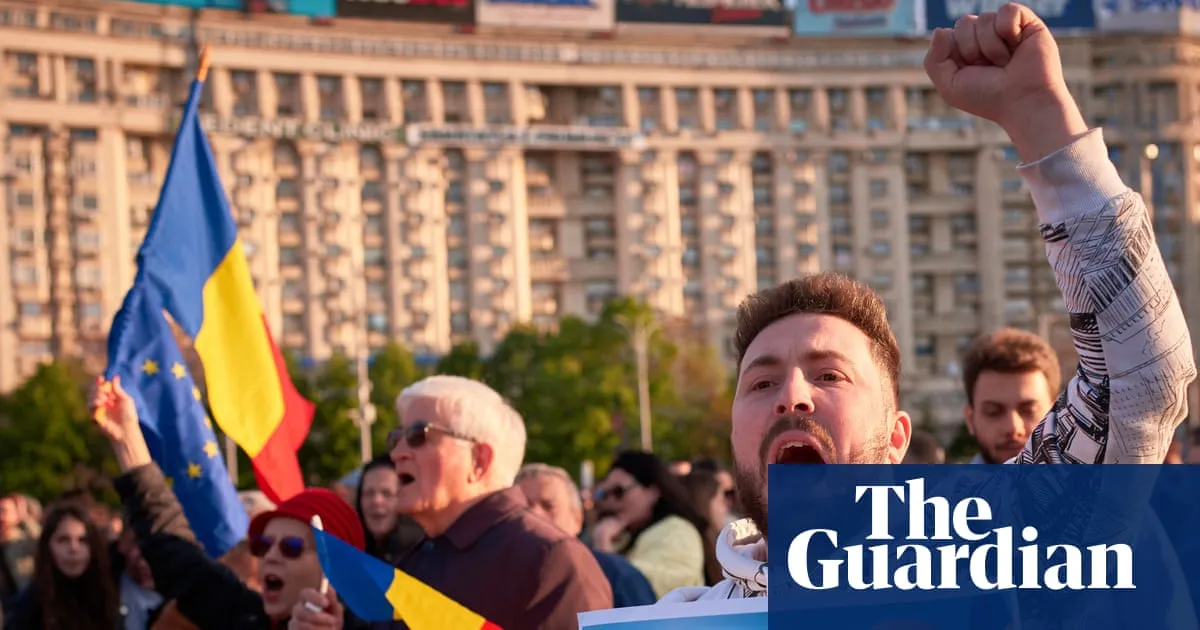
Romanian government collapses

Romania’s pro-European government collapsed on May 5, 2026, after losing a no-confidence vote that drew support from both the far-right Alliance for the Union of Romanians (AUR) and the Social Democrats (PSD). This unexpected alliance has raised significant concerns in Brussels regarding the future of Romania’s political landscape.
The no-confidence motion garnered 281 votes in the 464-seat parliament, signaling a dramatic shift in support. Prime Minister Ilie Bolojan, who led the National Liberal Party (PNL), described the motion as “false, cynical and artificial,” reflecting his disbelief at the coalition that orchestrated his downfall.
The political turmoil comes on the heels of a troubling budget deficit that reached nearly 8% in 2025 — the highest within the European Union. With parliamentary elections not scheduled until 2028, many are left wondering how this will impact Romania’s economic stability.
As the dust settles, Nicușor Dan is expected to hold consultations with party leaders to explore options for forming a new coalition government. Yet, uncertainties loom over how quickly a new prime minister can be nominated; parliament has 60 days to approve any nominee.
The rise of AUR as the most popular party — now polling at approximately 37% — indicates a significant shift in public sentiment. “There is life after the no-confidence vote,” remarked Sorin Grindeanu, hinting at potential avenues for future governance despite current challenges.
Cătălin Predoiu emphasized the importance of remaining flexible: “We must keep our options open,” suggesting that negotiations will be crucial in these uncertain times.
The situation remains fluid, with no clear timeline established for forming a new government. As Romania navigates this political upheaval, officials and citizens alike are left grappling with how these changes will affect their daily lives and the broader European context.

As NewsUK's Senior Football Correspondent, Thomas Beckwith reports on the Premier League, the EFL and the England national side for readers across the country. He reported on three World Cups for a national news agency. He holds a degree in Sports Journalism from Sheffield Hallam University and completed an NCTJ diploma. Thomas lives in Sheffield, where he watches lower-league football most weekends. “Football writing is about the decisions, not just the result.”
Related Posts
Petition for Legal Parent Recognition Gains Momentum in the UK

UK state pension age increase