Argentina World Cup row: Fifa assessing ‘Falklands are Argentine’ banner

Incident during World Cup semi-final
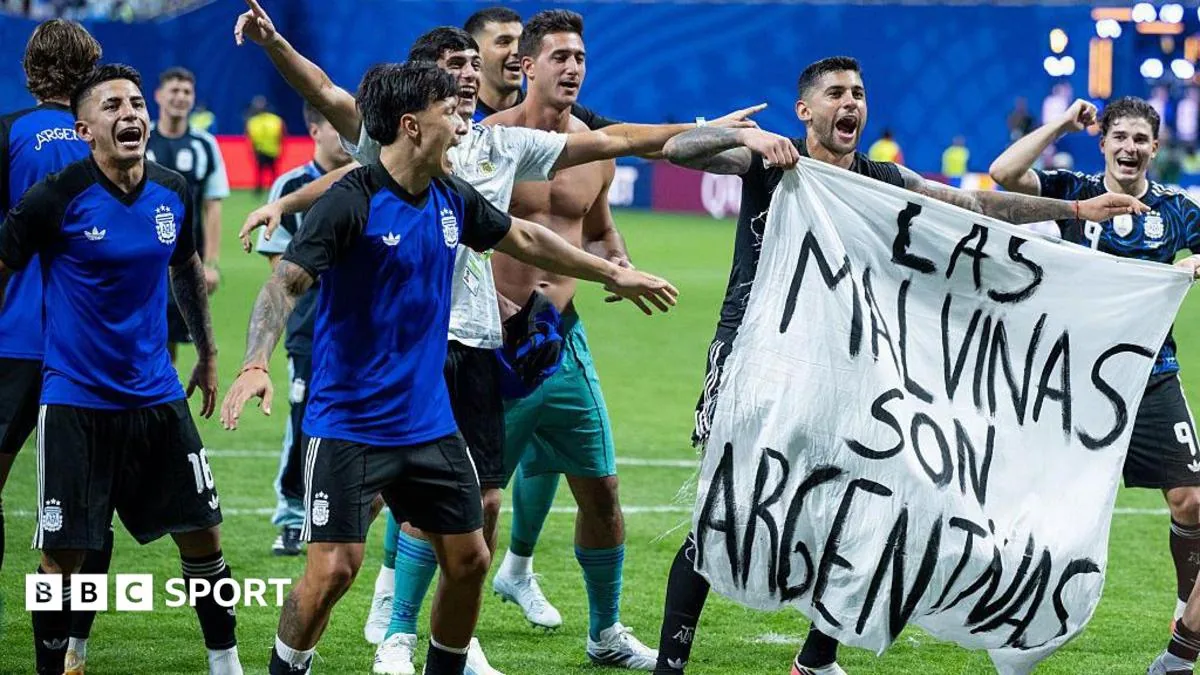
Fifa is currently evaluating match reports following an incident where Argentina players displayed a banner supporting their country’s claim to the Falkland Islands. This occurred after their World Cup semi-final victory against England. The banner, which read “Las Malvinas son Argentinas,” translates to “The Falklands are Argentine.” The Falkland Islands are a British overseas territory located in the south-west Atlantic Ocean and remain a point of contention regarding sovereignty between the UK and Argentina.
The match, held in Atlanta, concluded with Argentina scoring two late goals to defeat England. Following the final whistle, the players held up the banner. A Fifa spokesperson confirmed that the independent disciplinary committee is assessing the match reports and relevant circumstances to determine potential next steps based on the Fifa disciplinary code.
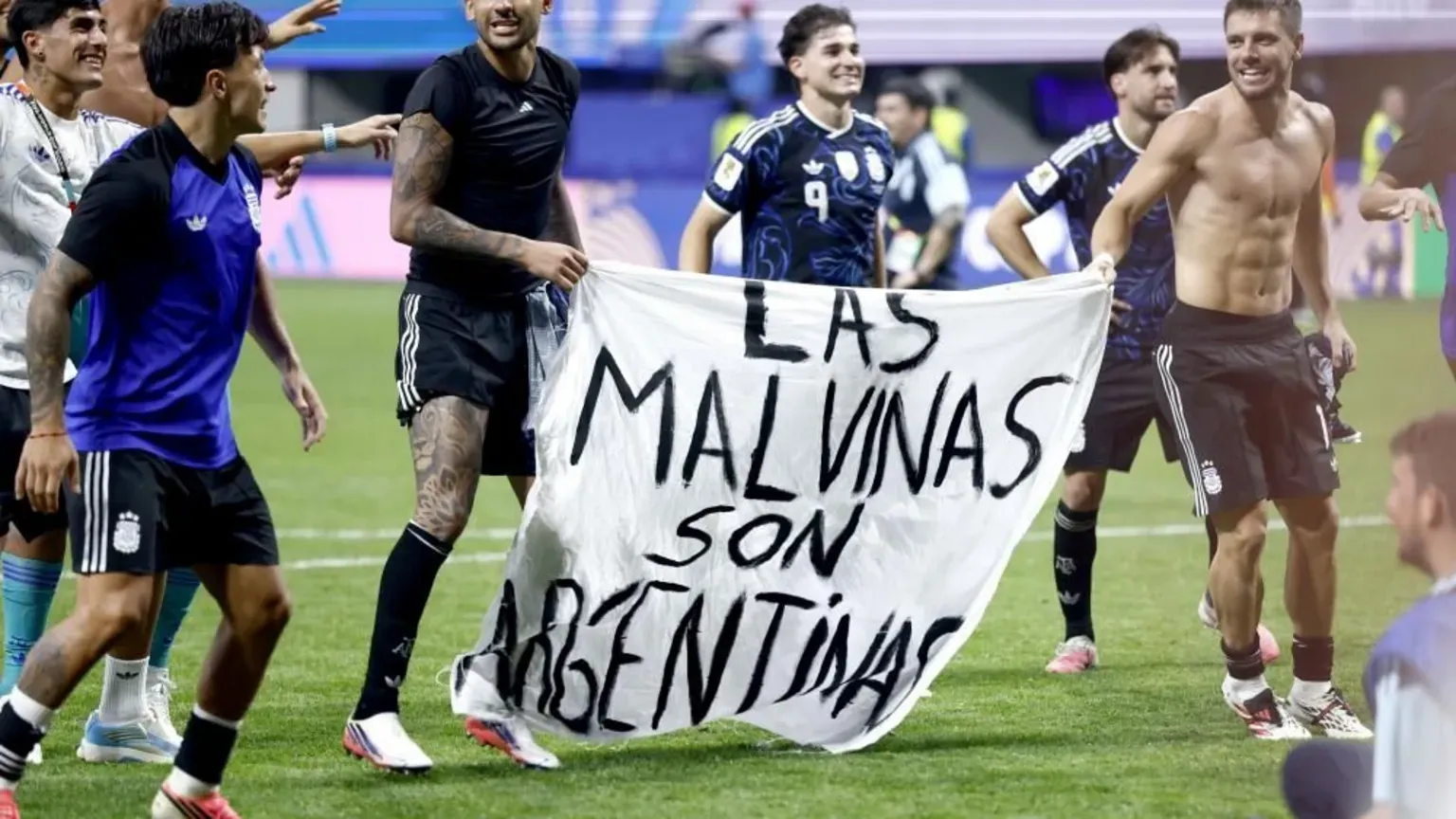
This is not the first time Argentina’s football association has faced scrutiny over such a display. In 2014, Fifa fined the association £20,000 for a similar banner displayed before a friendly match against Slovenia. At that time, the governing body stated that the gesture violated rules concerning political action and team misconduct.
Reactions and potential consequences
The incident has drawn significant reactions from various political figures. Downing Street has supported calls for Fifa to investigate, with the prime minister’s official spokesperson stating that while the World Cup might not belong to the UK, the Falkland Islands “definitely are.” The spokesperson reiterated that the UK’s commitment to the Falklands will remain steadfast.
The government of the Falkland Islands expressed disappointment regarding the banner and hopes that Fifa will “sanction all behaviour of this nature in line with its own rules.” They also stated a desire for politics to be kept out of sport. Peter Kyle, the business and trade secretary, echoed this sentiment, emphasising the importance of keeping politics separate from the World Cup and urging Fifa to conduct a thorough investigation. Kemi Badenoch, leader of the Conservative Party, also called for Fifa to investigate the matter.
Argentina’s vice-president, Victoria Villarruel, posted on X after the semi-final victory, stating that the Falklands are Argentine. She added that while bringing such messages to the stadium might be banned, the sentiment is deeply ingrained.
Before the semi-final, Argentina manager Lionel Scaloni had indicated he would not mix football and politics, acknowledging the historical context but focusing on the game itself. The UK government’s position remains that self-determination rests with the islanders, and their commitment to the Falklands will never waver.
Historical context and ongoing dispute
The sovereignty dispute over the Falkland Islands dates back decades. In 1982, Argentina, then under a military junta led by General Leopoldo Galtieri, invaded the islands, which are situated 300 miles off Argentina’s east coast. The conflict lasted for 74 days, from April to June 1982, resulting in the deaths of 649 Argentine and 255 British servicemen, along with three islanders.
The government of the Falkland Islands expressed disappointment regarding the banner and hopes that Fifa will “sanction all behaviour of this nature in line with its own rules.” They also stated a desire for politics to be kept out of sport. Peter Kyle, the business and trade secretary, echoed this sentiment, emphasising the importance of keeping politics separate from the World Cup and urging Fifa to conduct a thorough investigation. Kemi Badenoch, leader of the Conservative Party, also called for Fifa to investigate the matter.
Argentina’s vice-president, Victoria Villarruel, posted on X after the semi-final victory, stating that the Falklands are Argentine. She added that while bringing such messages to the stadium might be banned, the sentiment is deeply ingrained.
Before the semi-final, Argentina manager Lionel Scaloni had indicated he would not mix football and politics, acknowledging the historical context but focusing on the game itself. The UK government’s position remains that self-determination rests with the islanders, and their commitment to the Falklands will never waver.
Read Also
- Atlanta sees fan clashes and booed anthems before England-Argentina World Cup semi-final
- Tuchel vows to remain England head coach until Euro 2028 despite World Cup semi-final exit
- Munich: Olise informs Bayern of commitment amid Real Madrid links
- England squad debates Tuchel's tactics after World Cup semi-final loss to Argentina
Source: bbc.co.uk

Isla Hartley is a Sports Reporter at NewsUK. She covered the British summer of sport from Wimbledon to the Test grounds. She focuses on tennis, cricket and athletics and is known for clear, deadline-driven reporting. She holds a degree in Sports Studies from the University of Stirling and completed an NCTJ diploma. Now based in Glasgow, she runs half-marathons and follows Scottish athletics. “The overlooked athlete usually has the better story.”