Post-Match Celebrations Overshadow Argentina’s World Cup Semi-Final Victory

Post-Match Celebrations and Political Statements
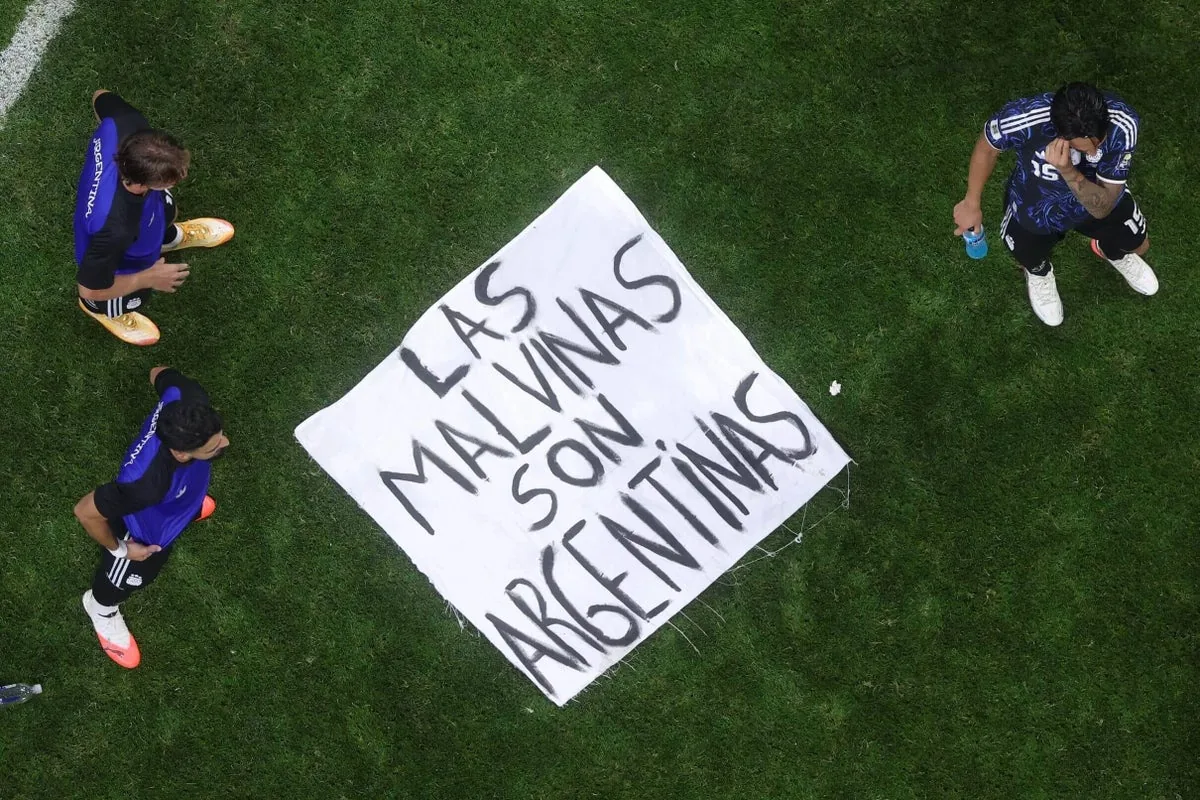
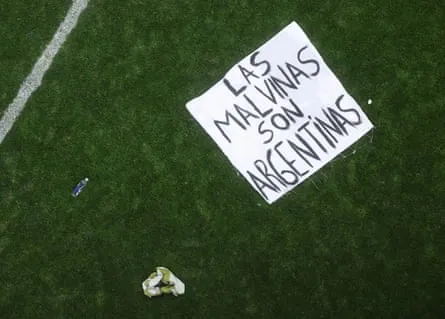
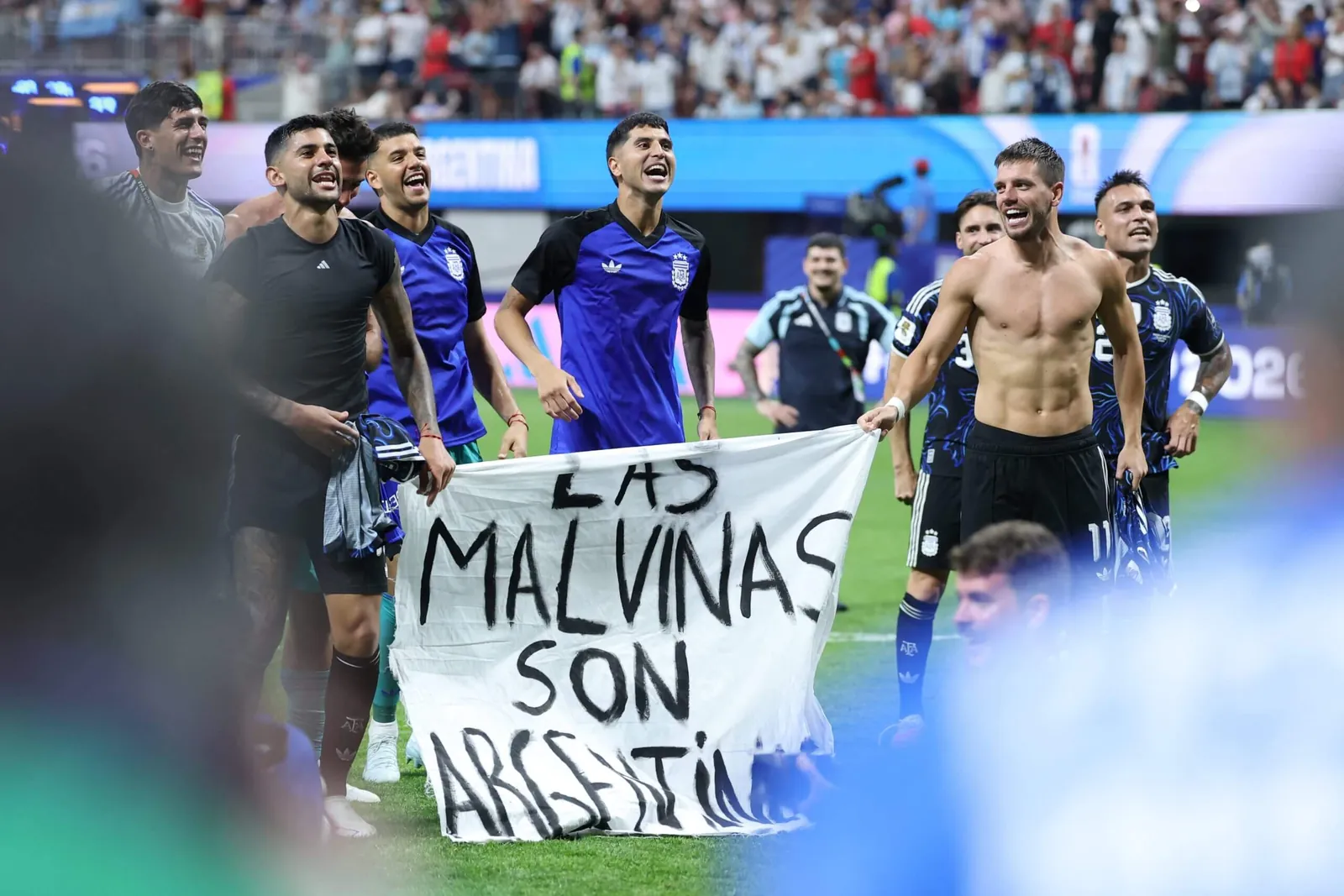
Following their World Cup semi-final victory over England, Argentina players displayed a banner stating “Las Malvinas son Argentinas.” The team, who scored twice to secure their place in a second consecutive World Cup final. They are set to face Spain in New Jersey on Sunday.
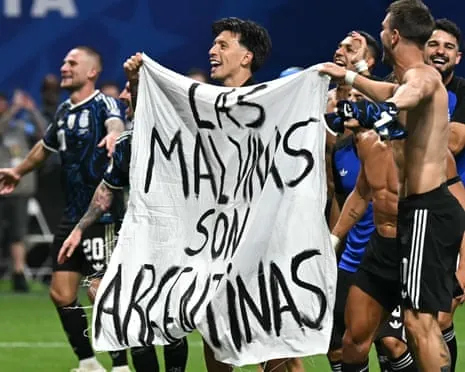
The banner refers to the ongoing dispute over the territory, known as the Falkland Islands in Britain and Islas Malvinas in Argentina. This territorial disagreement led to a 74-day conflict 44 years ago, resulting in the deaths of over 900 individuals, including 649 Argentinians and 255 Britons.
Lisandro Martínez and Giovani Lo Celso were seen holding the banner and waving to supporters. The origin of the banner was not immediately clear. This incident is not the first time political banners have been observed during the World Cup. Previously, Iranian Americans displayed pre-revolutionary flags in Los Angeles during Iran matches, which proceeded without incident.
Prior to the match against England, after defeating Switzerland in the quarter-final, some Argentina players were heard chanting, “For the Malvinas, for Diego [Maradona] and for Leo [Messi]’s last one.”
Official Reactions and Security Measures
Rodrigo De Paul, an Argentina midfielder, commented on the situation, stating that while the team understands the game transcends sport and brings back memories, it is important to recognise it as a football match. He added that discussions about the Malvinas should occur in other forums, acknowledging the historical atrocity and remembering those who died, but emphasising the team’s focus on winning the match to reach the final.
Fifa’s stadium code of conduct prohibits “banners, flags, flyers, apparel and other paraphernalia that are of a political, offensive, and/or discriminatory nature” within stadiums. Fifa has not yet responded to requests for comment regarding the incident.
Argentina’s security minister, Alejandra Monteoliva, confirmed that enhanced security measures were discussed at a meeting in the US. She stated that 1,600 officers would be deployed to ensure a peaceful celebration and that the entry of any items with provocative messages, whether political or racial, is forbidden.
Ahead of the semi-final, Argentina’s vice-president, Victoria Villarruel, made comments referring to England as “usurping pirates” and stating that the match was “not just another match.” She linked the game to the Malvinas, Diego Maradona, and Leo Messi’s final World Cup. In 2013, a referendum in the Falkland Islands saw islanders vote to remain a UK overseas territory.
Argentina coach Lionel Scaloni sought to distance the team from political discussions before the match, calling it “madness” to mix sport and politics. He acknowledged the sadness of past events but stressed the importance of keeping the football match separate from historical conflicts.
Potential Sanctions and Regulatory Stance
Argentina faces the risk of sanctions from Fifa due to the display of the banner. The International Football Association Board (IFAB) and Fifa maintain a clear policy against the display of political, religious, or personal slogans, statements, or images on equipment. Their rulebook specifies that players must not reveal undergarments with such content, nor display advertising other than the manufacturer’s logo.
Any violation of these rules can lead to sanctions for the player and/or the team by the competition organiser, national football association, or Fifa. Fifa typically awaits match reports before making decisions, with no set timeframe for such rulings.
The term ‘Las Malvinas’ is used in Argentina for the Falkland Islands, located approximately 480 km off the east coast of mainland Argentina. The historical dispute dates back to the early 19th century, with Britain initially claiming the islands in 1774 and reasserting control in 1832. The 1982 conflict began when Argentina’s military government invaded, ending with an Argentine surrender on June 14.
If the banner is deemed political, it would also violate Fifa’s stadium code of conduct, which prohibits materials with discriminatory content based on various factors, including political opinion. In June, Fifa’s ban on pre-revolutionary Iran flags at the World Cup was upheld in a court hearing in Los Angeles. Argentina, as the reigning world champion, will play Spain at MetLife Stadium on Sunday.
Read Also
Source: theguardian.com

Isla Hartley is a Sports Reporter at NewsUK. She covered the British summer of sport from Wimbledon to the Test grounds. She focuses on tennis, cricket and athletics and is known for clear, deadline-driven reporting. She holds a degree in Sports Studies from the University of Stirling and completed an NCTJ diploma. Now based in Glasgow, she runs half-marathons and follows Scottish athletics. “The overlooked athlete usually has the better story.”