Fifa’s controversial commercialisation plans draw criticism from Uefa and politicians

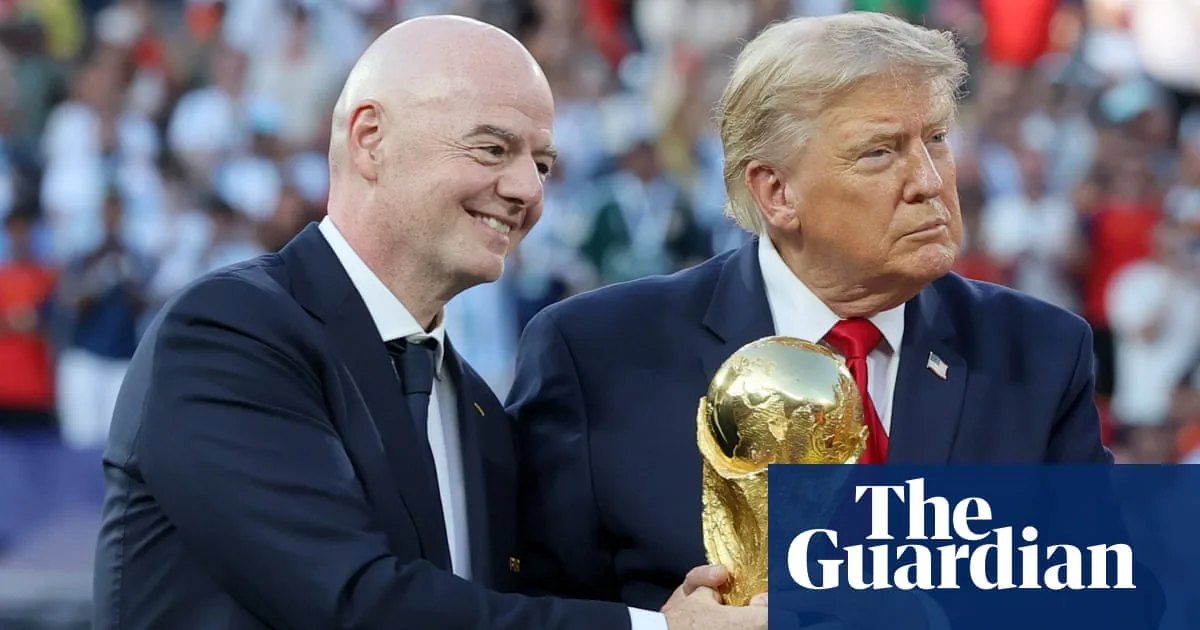
Fifa has announced plans to sell commercial rights to its tournaments, including the World Cup, to private investors. This move has prompted immediate criticism from Uefa, leading European clubs, and politicians. Uefa issued a strong statement, accusing Fifa of attempting to sell the “soul of football” and is reportedly considering its legal options. Sources within several elite clubs have also privately expressed strong disapproval of the proposal.
Fifa confirmed it is collaborating with the US bank JP Morgan to establish a new entity named Fifa Forward Enterprise (FFE). This entity aims to generate hundreds of millions of dollars by selling a significant stake in the commercial rights of the men’s and women’s World Cups, as well as the Club World Cup, to investors. The plan includes promises of increasing the distribution of funds by “over $10bn” (£7.5bn), which would then be redistributed to Fifa‘s 211 member associations.
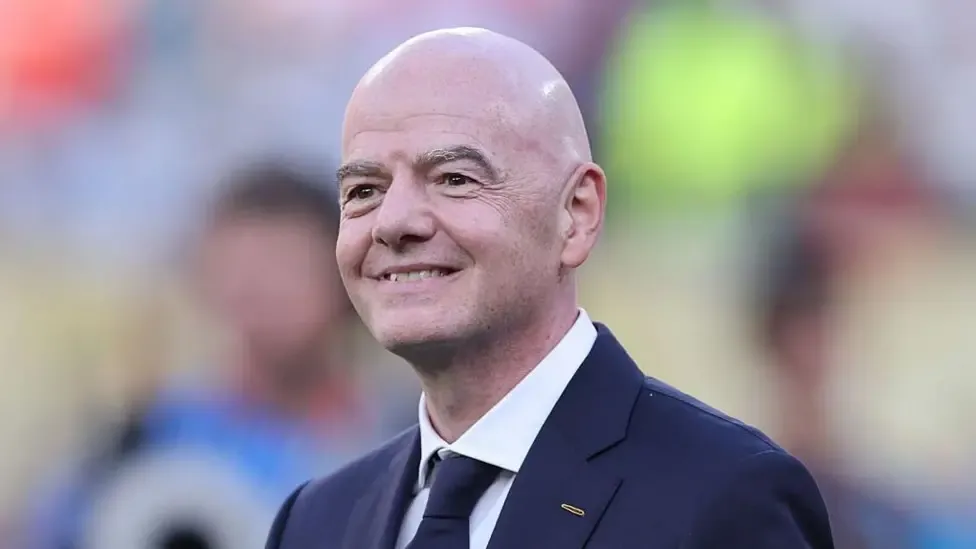
Thrive Capital, an investment company founded by Joshua Kushner, is leading the search for investors for FFE. Gianni Infantino, the Fifa president, stated that the plan would allow the commercial aspect of the game to operate as a focused, dedicated business, with its value shared more widely globally. The proposals require approval from a majority of member associations, though Fifa has not specified when a vote will take place.
Concerns over commercialisation
Multiple sources familiar with Fifa‘s proposals suggest the new commercial venture is valued at approximately $20bn. Infantino is reportedly seeking to capitalise on football’s increasing global popularity following this summer’s World Cup in the US, Canada, and Mexico. Reports indicate that Fifa‘s revenues for that tournament are expected to exceed $15bn, which appears to have encouraged Infantino to pursue further financial gains.
The announcement of these plans triggered an immediate backlash from Uefa. The European governing body stated that this move “crosses a line that football’s governing institutions should never cross.” Uefa emphasised the seriousness of the situation, urging all National Football Associations and stakeholders to consider the implications for the future of the game. They asserted that the “soul and governance of football are not assets to trade,” particularly without transparency regarding financial beneficiaries, and declared that football is not Fifa‘s to sell.
Andy Burnham, the Mayor of Greater Manchester, also condemned the initiative. He stated on social media that football belongs to the fans, not investors. Burnham described the World Cup as the greatest competition in world sport, not a product to be sold, and argued that selling any part of it constitutes a “sell out.”
Potential impact and future considerations
Members of the Fifa council were reportedly surprised by the announcement, having been excluded from the decision-making process. This is not the first time Infantino has sought private capital for Fifa; in 2018, he had a deal in principle with SoftBank for $25bn to fund an expanded Club World Cup and global Nations League, but it lacked sufficient support, largely due to European opposition.
Fifa contends that its plan, involving a dedicated commercial subsidiary, mirrors models used by governing bodies in other sports, such as Premiership Rugby‘s 2018 partnership with CVC Capital Partners. However, Uefa views this announcement as a step too far, raising concerns about potential further expansion of Fifa competitions in terms of size and frequency to generate revenue, which could impact its own lucrative competitions.
Fifa‘s statement indicates that the new enterprise would enable an increase in funding for each member association, from $8m to $20m annually, a substantial sum for many of its 211 members. Fifa also maintains it would retain responsibility for football’s governance and the international match calendar. However, inviting private investment in commercial rights could subject decision-makers to external pressures, potentially leading to investors influencing decisions that affect the entire sport, such as more frequent World Cups or hosting them only in the most profitable markets.
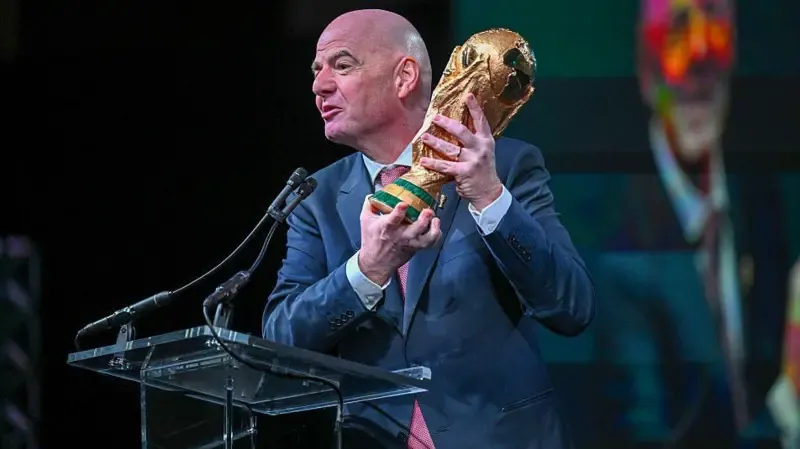
Football finance expert Kieran Maguire suggested that the proposals offer Fifa an opportunity to generate more money, attracting many interested parties. He also noted that if the FFE organisation is established, there might be pressure for a 64-team World Cup to occur every two years to satisfy shareholders. A potential vote by all 211 members at the Fifa Congress in Morocco in March is also mentioned.
Source: bbc.co.uk

As NewsUK's Senior Football Correspondent, Thomas Beckwith reports on the Premier League, the EFL and the England national side for readers across the country. He reported on three World Cups for a national news agency. He holds a degree in Sports Journalism from Sheffield Hallam University and completed an NCTJ diploma. Thomas lives in Sheffield, where he watches lower-league football most weekends. “Football writing is about the decisions, not just the result.”