Norway opted to rest key players, including star striker Erling Haaland, in their final World Cup 2026 group stage match against France, a decision that has sparked discussion.

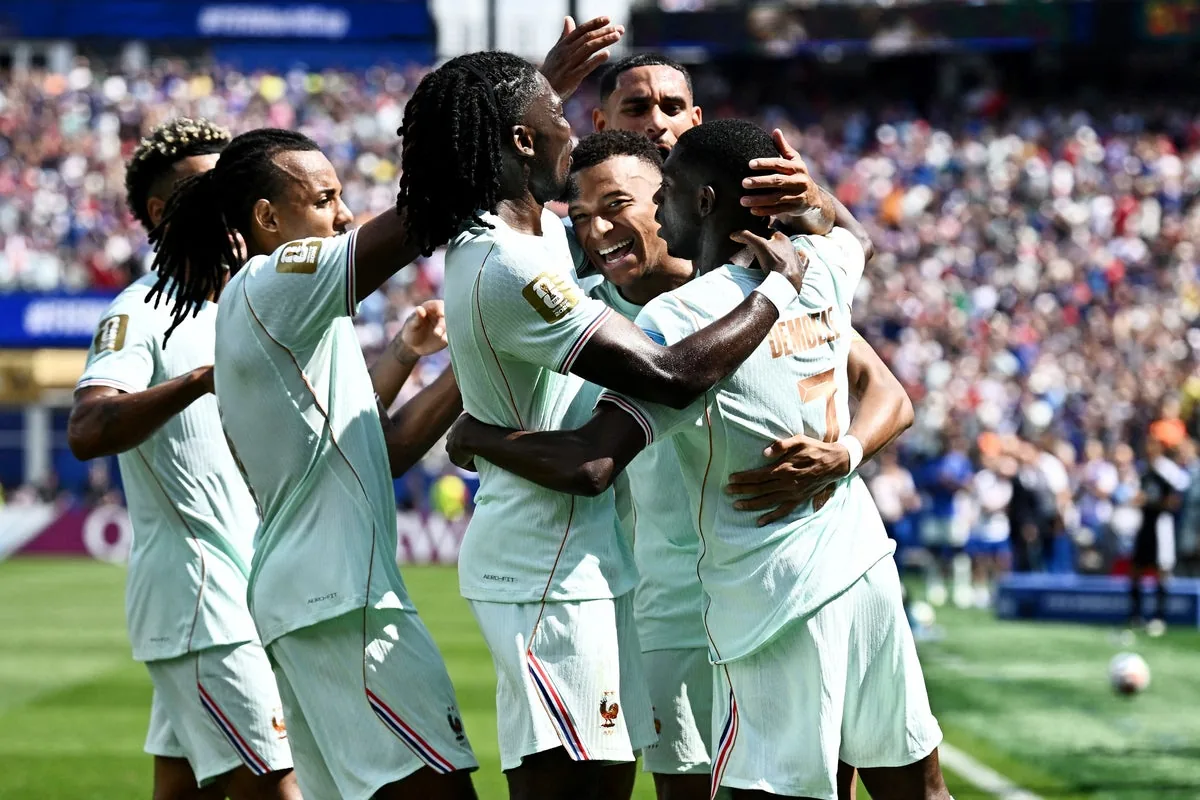
Norway opted to rest key players, including star striker Erling Haaland, in their final World Cup 2026 group stage match against France, a decision that has sparked discussion. The match, held at Boston Stadium, saw France secure a 4-1 victory, with Ousmane Dembele scoring a first-half hat-trick. Haaland, who had scored four goals in the two previous group games, began the match on the bench.
Norway manager Stale Solbakken made 10 changes to his starting XI, with the team already having qualified for the knockout stages. Solbakken described the decision as a “no-brainer,” citing player health and medical advice, as well as input from some players. He acknowledged that Norway fans would have wanted to see Erling and Martin Odegaard play. After their game against Senegal, five or six players, including the entire defensive line and one or two midfielders, were significantly affected after 80 minutes of play.
Strategic player rotation
The strategic decision to rest players meant that France, featuring an array of attacking talent, capitalised on the changes. Dembele’s hat-trick was a highlight, with his first goal coming just seven minutes into the game. Kylian Mbappe also contributed to the attacking play, providing a pass for Dembele’s first goal, despite not scoring himself. Desire Doue added a fourth goal for France late in the match. Jorgen Strand Larsen, Haaland’s deputy, missed a penalty for Norway that could have reduced France’s lead to 3-2 after half-time.
Former England striker Ian Wright expressed surprise at Norway’s extensive changes, especially as they had fielded the same starting XI in their wins over Iraq and Senegal. Former Scotland winger Pat Nevin noted the physical style of play adopted by the Norwegians, suggesting that resting players was a way to avoid potential injuries. He questioned whether maintaining a physical style and risking two players was worth it, implying that Norway believed it was not.
Norway is playing in their first World Cup since 1998. Former Republic of Ireland midfielder Roy Keane understood the reasoning behind Solbakken’s decision, highlighting the different expectations for Norway compared to France, who are expected to compete for the World Cup title. Keane suggested that Norway’s priority was to advance from the group stage, which they achieved, and that the manager likely aimed to rest players for subsequent matches.
France assistant Guy Stephan, who was deputising for Didier Deschamps, stated he was not surprised by Norway’s changes, acknowledging that Solbakken was preparing for the round of 32. Stephan indicated that the effectiveness of the decision would become clear in four days.
Implications for knockout stages
The outcome of the match saw France top Group I with three wins from three games. Their reward is a last-32 match at the New York New Jersey Stadium on 30 June against the runners-up of Group F or G. In contrast, Norway faces a significant travel challenge, with a 1,100-mile trip from their base in Greensboro, North Carolina, to Arlington, Texas, to play Ivory Coast on the same day. Had Norway topped their group, their travel distance would have been half of what it is now.
Nevin commented on the logistical complexities, particularly the “massive distances” involved if a team loses a game and has to relocate. However, he also suggested that ensuring players are “completely and utterly fit” for the knockout stages was likely a primary concern for Norway’s management. If Norway defeats Ivory Coast, they would then travel back to New Jersey for a last-16 tie against the winners of the Brazil-Japan match.
Norway is one of only four teams to have made 10 or more changes to their starting XI for a World Cup match in the same edition. Spain did this in 2006, winning their final group-stage game but later losing to France in the last 16. In 2018, Belgium made 10 changes, defeated Japan 3-2, and then went on to beat Brazil 2-1 in the quarter-finals before being eliminated by France.
Despite the team changes, thousands of Norwegian fans travelled to the United States to support their country. While some expressed confusion at the team news, others continued to enjoy the experience, performing their Viking-style row celebration throughout the game.
Haaland had previously expressed his thoughts on facing France after Norway qualified for the knockout stages, stating he “couldn’t care too much about that game now” and that France would “probably going to win against us” and “probably going to win the whole tournament.”
France, with their depth of talent, demonstrated their strength in the match. Dembele’s hat-trick placed him alongside Mbappe in the scoring charts, making France the first team since Poland in 1974 to have two players score four goals each in the group stage. This expanded tournament marks the first time five players have scored four or more goals in the group stage.
The French team’s performance, even with defensive vulnerabilities, showcased their ability to overcome challenges. Jorgen Strand Larsen’s penalty was saved by Mike Maignan, and Thelo Aasgard scored for Norway. Didier Deschamps was absent from the match to attend his mother’s funeral, and the team’s victory may have offered some comfort during a difficult time. The French federation revealed that the squad was unable to wear armbands in her honour after their request to Fifa.
The match took place on Thursday, 26 June.
Read Also
- Warrington Wolves overcome injuries to edge Catalans Dragons in Super League clash
- Seattle to host 'Pride match' between Iran and Egypt during World Cup 2026
- Newcastle's Northumberland Plate features Circus Of Rome and Team Player
- Wimbledon 2026 draw sees Serena Williams face Maya Joint, Jack Draper to play Taylor Fritz
Source: bbc.co.uk

Isla Hartley is a Sports Reporter at NewsUK. She covered the British summer of sport from Wimbledon to the Test grounds. She focuses on tennis, cricket and athletics and is known for clear, deadline-driven reporting. She holds a degree in Sports Studies from the University of Stirling and completed an NCTJ diploma. Now based in Glasgow, she runs half-marathons and follows Scottish athletics. “The overlooked athlete usually has the better story.”