South Korea’s World Cup exit sparks national football crisis

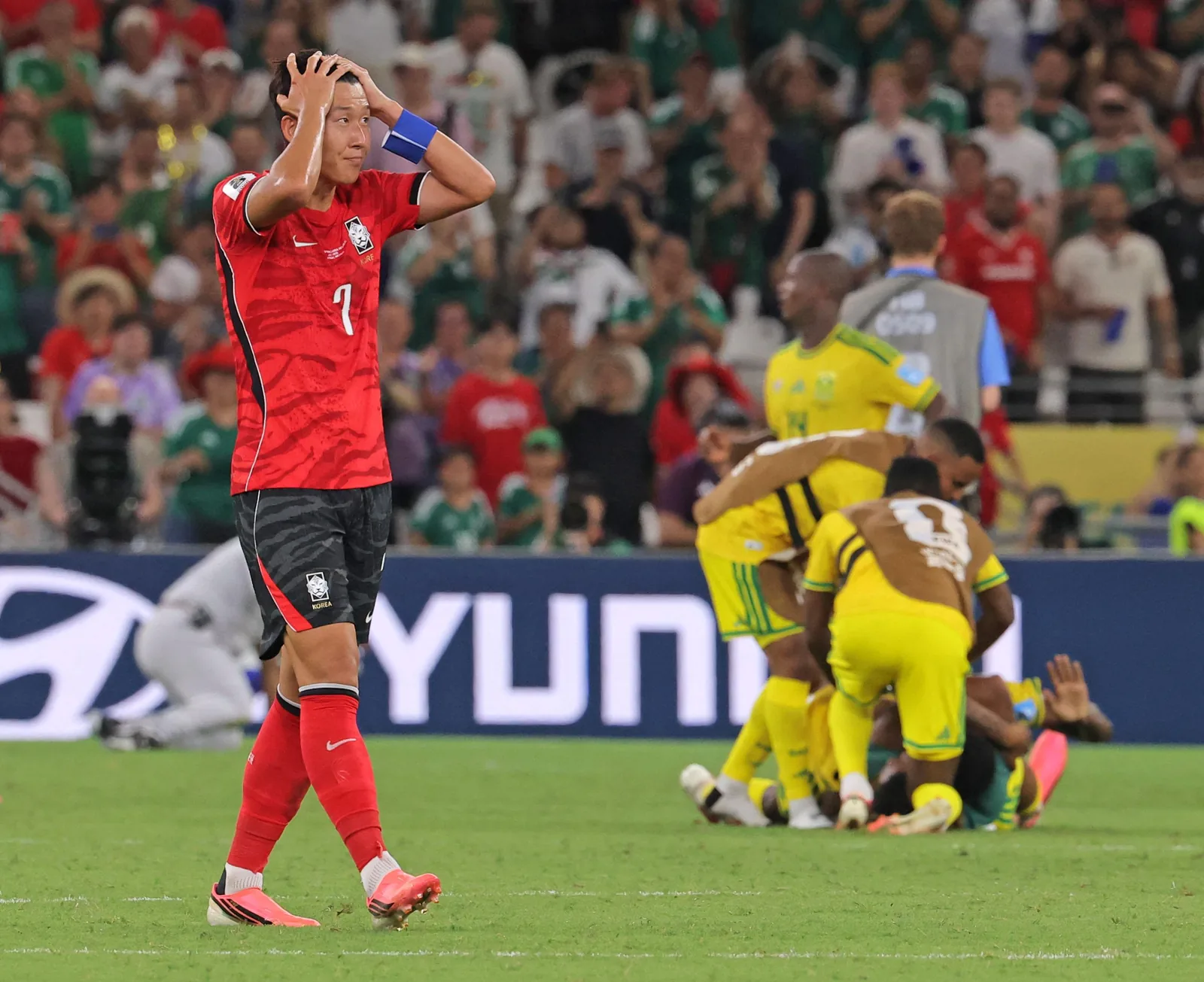
The recent elimination of South Korea from the 2026 World Cup has led to a significant crisis within the nation’s football community. Head coach Hong Myung-bo resigned on Sunday, hours after the team’s exit was confirmed. This marks his second early World Cup departure as coach, following a similar outcome in 2014.
Hong expressed his regret, stating, “I am genuinely very sorry.” His departure comes amidst widespread public anger, with former player Park Ji-sung describing the situation as “miserable.” The intensity of the reaction has reportedly included death threats directed at the coach, and the return locations for players and staff were kept confidential.
Mounting Pressure and Public Discontent
The team’s performance in Group A ignited fan fury, which had been building for some time. After an initial 2-1 victory against the Czech Republic, the team, featuring players like Son Heung-min, Lee Kang-in of Paris St-Germain, and Bayern Munich‘s Kim Min-jae, suffered a 1-0 defeat to Mexico. This left them needing a point against South Africa to secure progression.
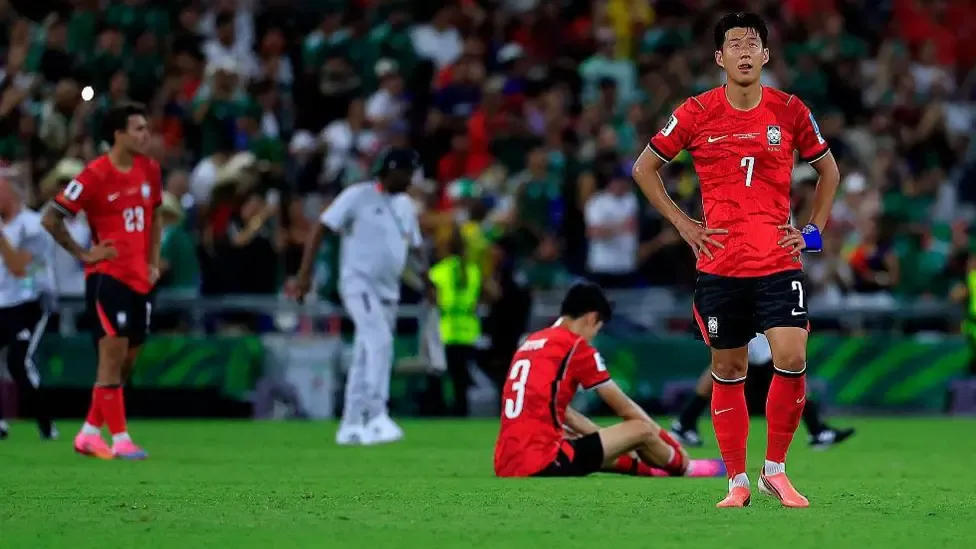
In the crucial match against South Africa, Hong made the decision to bench captain Son Heung-min. The team subsequently lost, a performance that former Tottenham Hotspur defender Lee Young-pyo described on television as “the worst match by a Korean football team in the 21st century.” Following the loss, the team endured a three-day wait to learn if they would advance as one of the best third-placed teams, ultimately facing elimination.
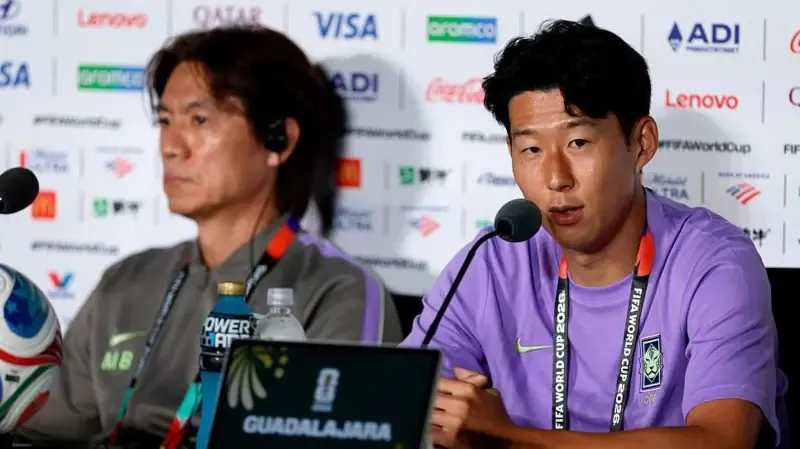
The team’s camp was not without its issues prior to this. Media personnel were reportedly overheard mocking Son’s military exemption, which he received after being part of the team that won gold at the 2018 Asian Games. In response, players boycotted domestic media duties for several days. Son, who turns 34 in July, may consider ending his international career. A planned public welcome ceremony at Incheon International Airport was cancelled, with public frustration largely directed at the governance of the sport rather than the players.
Presidential Condemnation and Calls for Reform
The governance issues were brought to the forefront by a statement from President Lee Jae-myung on Sunday. He expressed “not just confusion but utter bewilderment at the unexpected outcome,” attributing the early exit to a “failure of organisation and personnel.” The president’s statement on social media criticised the prioritisation of “favouritism and cronyism” over competence in leadership appointments.
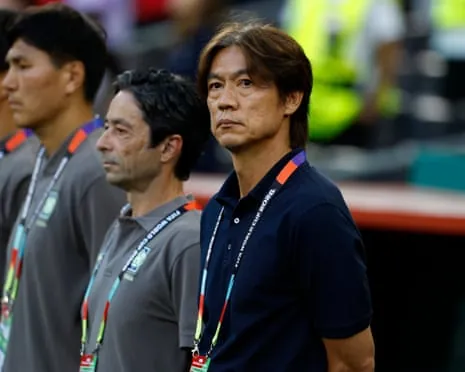
Chung Mong-gyu, president of the Korea Football Association (KFA) since 2013, faced criticism for his hiring practices, including the appointment of Hong in July 2024, and Jurgen Klinsmann a year prior. Questions arose regarding the fairness and transparency of these processes. Hong was booed during his first game in charge against Palestine in Seoul in September 2024, indicating early fan dissatisfaction.
The Ministry of Sports conducted an investigation into the KFA in November 2024, recommending the suspension of Chung and other officials. However, the KFA secured a court injunction, allowing Chung to run for and win a fourth term in February 2025. Chung, whose family owns Hyundai, a conglomerate with historical ties to the KFA, announced in May that he would step down after the World Cup, acknowledging “various controversies and criticisms” during his tenure.
A Contrast with Regional Rivals and a Path Forward
During Chung’s leadership, South Korea, which has made 11 consecutive World Cup appearances, has reportedly fallen behind Japan in football development. The K League, established in 1983 as Asia‘s first professional league, once dominated continental club competitions. However, J League clubs now reportedly outperform their K League counterparts and export more talent to Europe, with Japan‘s national team comprising exclusively European-based players.
This disparity was highlighted in October when Brazil won 5-0 in Seoul but then lost 3-2 in Tokyo days later. In March, while South Korea lost 4-0 to Ivory Coast, Japan defeated England 1-0 at Wembley. The structured approach in Tokyo has been contrasted with the perceived chaos in Seoul, with one fan noting Japan‘s “100-year vision” compared to Korea‘s frequent coaching changes influenced by a single individual.
Rival political parties in South Korea have also called for a parliamentary probe into the KFA‘s operations. Representatives from the ruling Democratic Party of Korea (DPK) and the main opposition People Power Party (PPP) voiced their displeasure, with one DPK lawmaker stating that “what Korean football needs is not merely remodeling, but reconstruction.” President Lee Jae-myung pledged a swift reform of sports administration nationwide following the team’s elimination.
Read Also
Source: bbc.co.uk

Nathan Crowley is the Sports News Writer at NewsUK, covering rugby union, golf and boxing with six years of reporting experience. He moved from regional newspapers into digital sport. He holds a degree in Journalism from Cardiff University and completed an NCTJ diploma. Based in Cardiff, he plays amateur rugby and follows the Six Nations closely. “Speed and accuracy are not a trade-off in sport news.”