Milan legend Franco Baresi passes away at 66

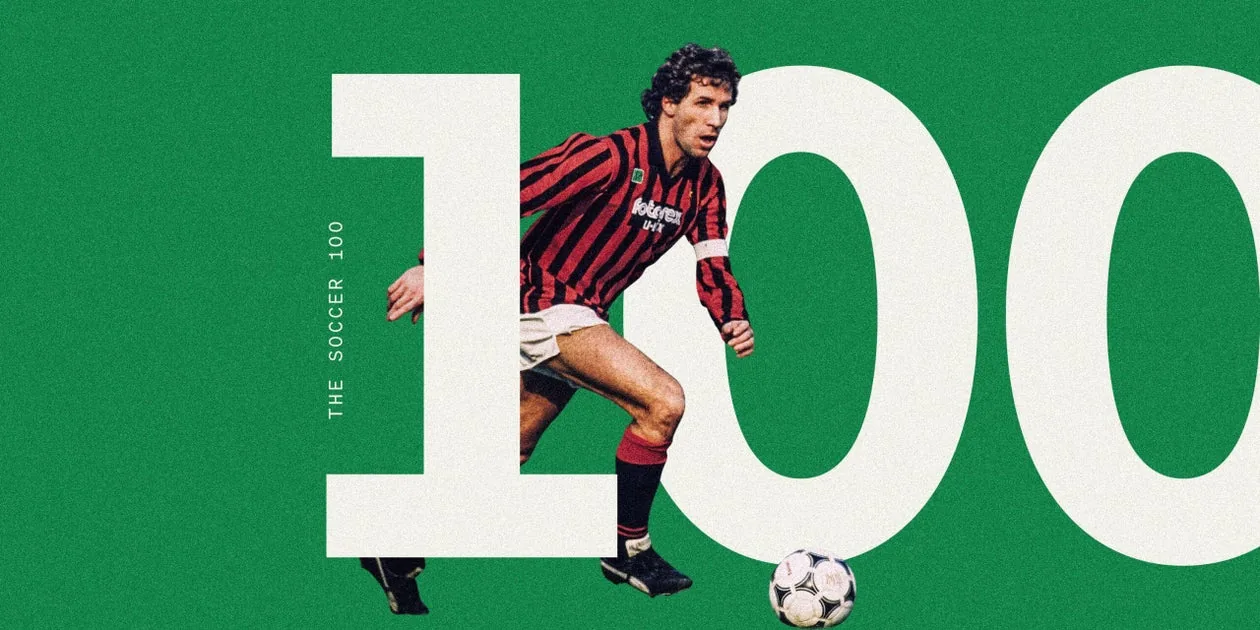
Franco Baresi, the former AC Milan captain and honorary vice-president, has passed away at the age of 66. Widely recognised as one of football’s greatest defenders, Baresi spent his entire club career with the Rossoneri, leading the team through a period of significant domestic and European success. His career spanned 20 years, during which he made 719 appearances in all competitions for Milan.
Baresi’s influence on the game was profound, revolutionising the role of a central defender. He was known for his tactical intelligence, leadership, and ability to organise a defence. UEFA president Aleksander Čeferin described Baresi as the “ultimate symbol of Italy’s great defensive tradition,” highlighting his extraordinary tactical intelligence and the heart of a warrior.
A Career Defined by Loyalty and Success
Baresi’s journey with AC Milan began early, joining the club after a trial at the age of 14. Despite initial doubts about his physical stature, Milan recognised his talent. He had just turned 19 when he secured his first Scudetto with Milan under coach Nils Liedholm in 1979. This period marked a shift in Italian football, with Liedholm pioneering zonal marking in Serie A, a style that suited Baresi’s impeccable reading of the game.
His loyalty to Milan was unwavering, even through challenging times for the club, including relegations due to the Totonero betting scandal and financial difficulties. Baresi remained with the club, which became a surrogate family after he lost his parents before the age of 16. This deep connection to Milan was a defining aspect of his career, as he never played for any other club.
Under Silvio Berlusconi‘s ownership and coach Arrigo Sacchi, appointed in 1987, Milan adopted a revolutionary style of play featuring a flat back four and hard pressing. Baresi was central to this transformation. He not only embraced Sacchi’s radical approach but also encouraged the coach to push the players harder, ensuring they internalised the new system. This commitment helped Milan win the Scudetto in 1988, followed by consecutive European Cup victories, showcasing some of the most memorable football ever played.
International Recognition and Legacy
Baresi’s club achievements included three European Cup/UEFA Champions League titles, two UEFA Super Cups, six Serie A trophies, four Italian Cups, and two Intercontinental Cups. He served as captain for 15 seasons, leading his team to these numerous honours.
On the international stage, Baresi earned 81 appearances for Italy, scoring once. He was part of the World Cup-winning squad in 1982, though he did not play. He also participated in UEFA Euro 1980 and 1988, and captained Italy in the final of the 1994 World Cup. Despite overseeing a clean sheet in that final, Italy ultimately lost to Brazil in a penalty shootout, with Baresi missing from the spot.
The Italian Football Federation (FIGC) president, Giovanni Malagò, stated that Italian football has lost “one of its legends,” an extraordinary champion who wore only two jerseys throughout his career: that of Milan and that of the Azzurra. The club itself released a statement expressing profound sadness, noting that Baresi’s example and integrity will forever be etched into AC Milan‘s DNA, just as his iconic number 6 shirt is.
His legacy is one of a player who not only excelled in his position but also inspired those around him, embodying the spirit of his club and revolutionising defensive play. His ability to anticipate the game, make precise passes, and his toughness, exemplified by playing more than an hour of a Milan derby in 1989 with a broken arm, solidified his status as a football icon.
Source: theguardian.com

As NewsUK's Senior Football Correspondent, Thomas Beckwith reports on the Premier League, the EFL and the England national side for readers across the country. He reported on three World Cups for a national news agency. He holds a degree in Sports Journalism from Sheffield Hallam University and completed an NCTJ diploma. Thomas lives in Sheffield, where he watches lower-league football most weekends. “Football writing is about the decisions, not just the result.”